
What is a “Proof” Coin? Understanding Mint Sets and Finishes
If you have ever inherited a collection or browsed a coin shop, you have likely seen coins sealed in hard plastic cases that look impossibly shiny and perfect.
These mirror-like pieces are known as “Proof” coins, and understanding what they are—and what they are not—is a crucial first step for any new collector or investor.
When people first start looking at coins, they often assume that any shiny, flawless coin is simply a brand-new coin that hasn’t been touched yet. However, in the numismatic world, “Proof” is not a description of a coin’s condition; it is a description of its method of manufacture. The United States Mint uses an entirely different, highly specialized process to create these stunning pieces, resulting in a finish that regular pocket change can never achieve.
The Difference Between Business Strikes and Proofs
To understand a proof coin, you first need to understand regular money. The coins jingling in your pocket right now are called “Business Strikes.” They are manufactured for everyday commerce. To meet the massive demands of the US economy, business strike coins are pumped out at lightning speed, struck just a single time by the coining press, and then dumped into giant metal bins where they inevitably scratch and ding against one another.
Proof coins, on the other hand, are struck exclusively for collectors and are never intended to be spent at the grocery store.
The Art of the Proof Process
The manufacturing process for a proof coin is incredibly meticulous. First, the blank metal discs (planchets) are specially treated, washed, and hand-polished before they ever reach the press.
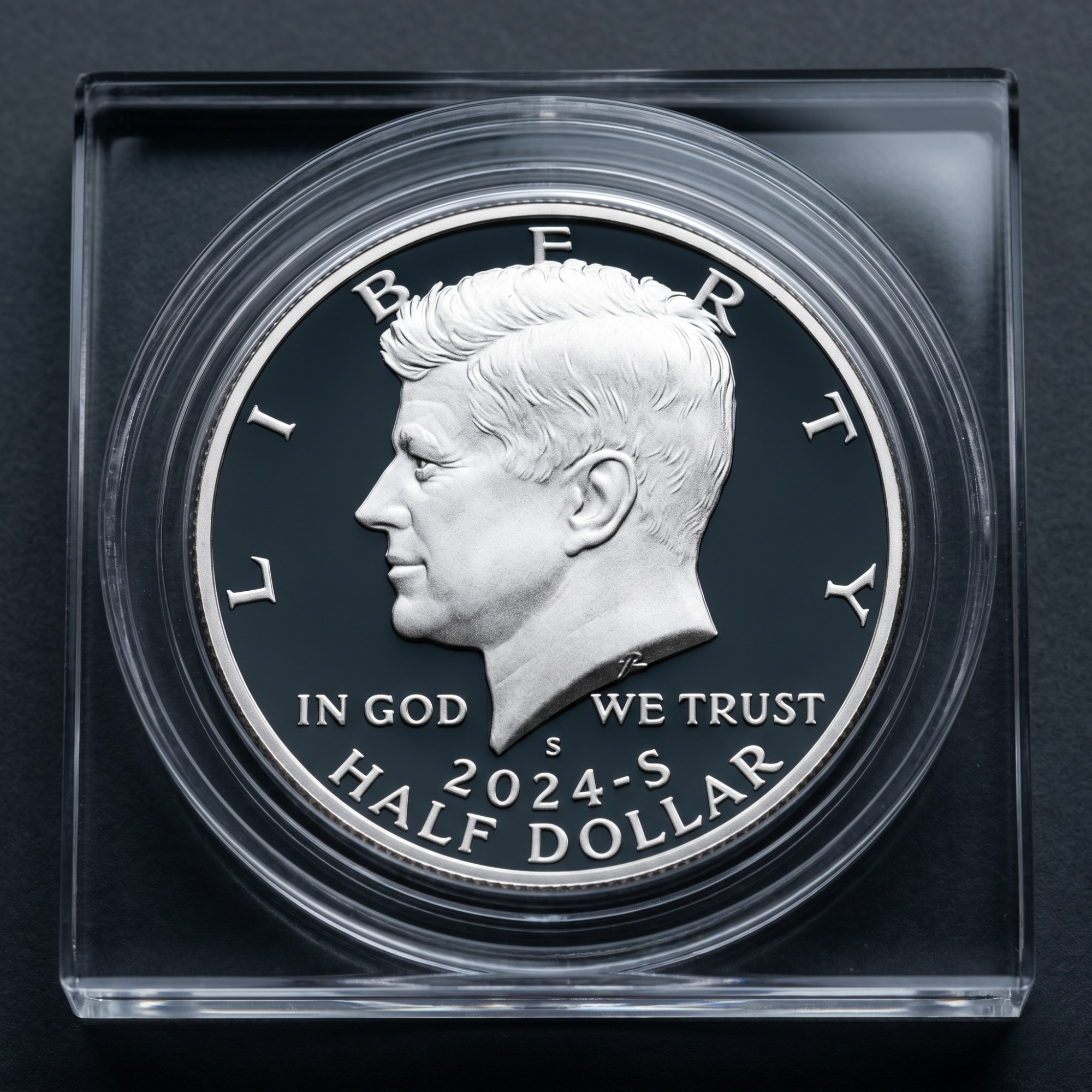
The steel dies used to strike the image onto the coin are also specially prepared. Mint technicians polish the flat background areas of the die to a mirror-like finish, while the raised design elements (like George Washington’s portrait) are treated with a special acid etch to give them a frosted, textured appearance.
When it is time to strike the coin, the press operates at a much slower speed and at a higher pressure. Crucially, a proof coin is struck multiple times (usually at least twice). This ensures the metal flows perfectly into every microscopic crevice of the die, resulting in incredibly sharp, squared-off rims and stunningly crisp details. Finally, the coins are removed by hand with soft gloves and sealed directly into protective plastic cases.
Proof Sets vs. Mint Sets
If you inherit an estate collection, you will often find flat cardboard or plastic envelopes labeled directly from the US Mint. It is important to know the difference between the two main types of sets:
- Proof Sets: These contain the specially manufactured, mirror-finish proof coins. They usually have a deep, reflective background with frosted white portraits (known as a “Cameo” finish).
- Uncirculated Mint Sets: These sets contain standard business strike coins. While they are brand-new and uncirculated, they do not have the mirror-like finish of a proof coin. They were simply pulled from the production line before they could get scratched in the giant storage bins.
Does “Proof” Mean “Valuable”?
This is the most common misconception among beginners: just because a coin is a proof does not necessarily mean it is worth a fortune.
Because the US Mint has produced millions of modern proof sets every year for decades to sell to collectors, supply often outpaces demand. A standard proof set from the 1970s or 1980s might only be worth a few dollars over its face value. However, there are two major exceptions:
- Vintage Proofs: Proof coins struck before 1950 (especially 19th-century proofs) had extremely tiny mintages and are incredibly rare and valuable.
- Silver Proof Sets: Starting in 1992, the Mint began offering special “Silver Proof Sets” where the dimes, quarters, and half dollars are struck in 90% silver instead of standard copper-nickel. These always carry a strong premium tied to the price of precious metals.
A Cornerstone of the Hobby
While modern proofs may not always be the rarest items in the vault, they are undeniably beautiful. They represent the absolute pinnacle of the engraver’s art, showing exactly how the coin was intended to look in its most perfect form.
Have You Inherited Mint or Proof Sets?
Deciphering the difference between clad proofs, silver proofs, and uncirculated mint sets can be confusing, and their values fluctuate with the precious metals market.
Contact Keywell Collectibles today for a transparent, professional evaluation of your US Mint sets and modern coinage.