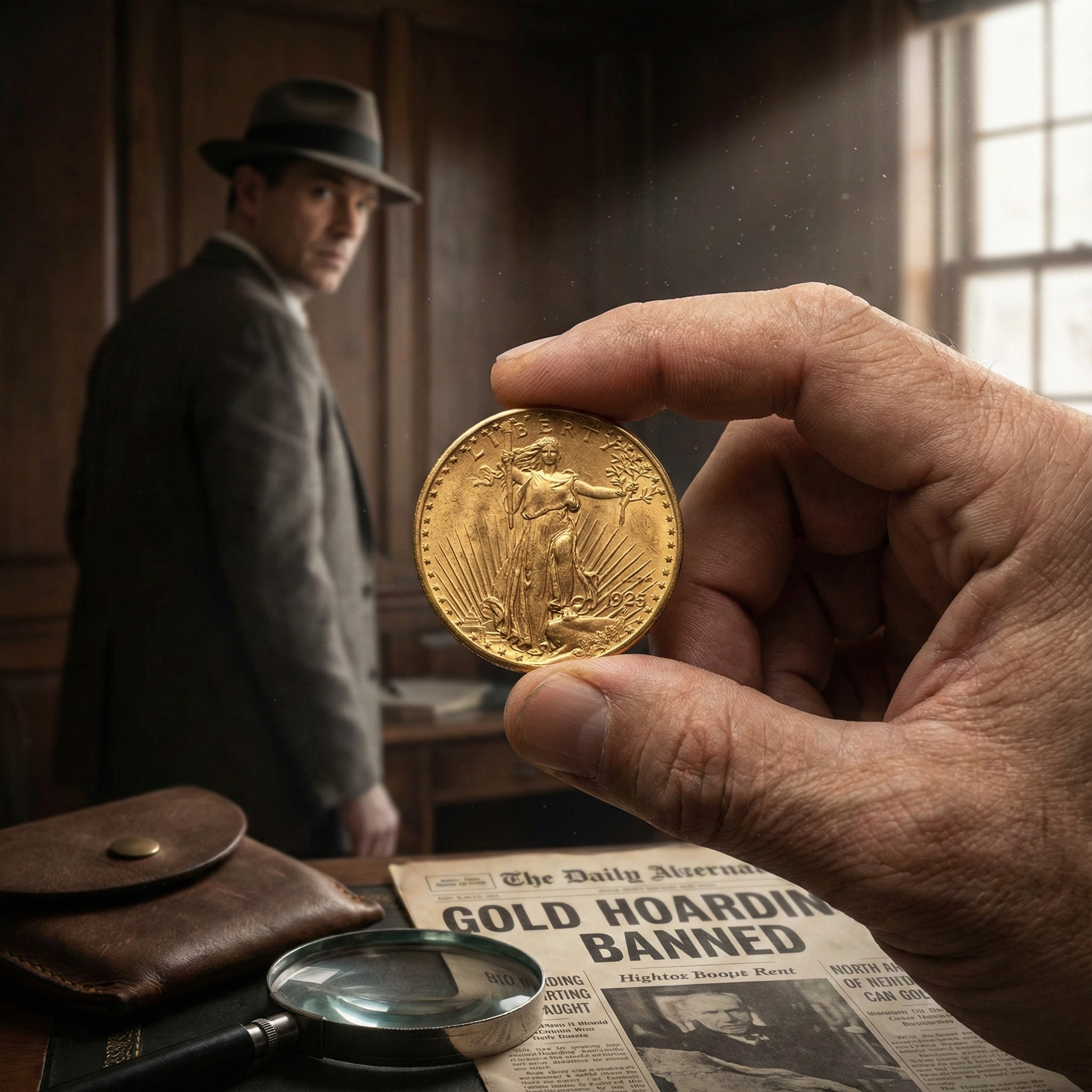
For nearly 150 years, that sound was the sound of the American economy.
Before credit cards, Bitcoin, or even reliable paper currency, real money was made of gold. From the tiny $1 gold piece to the massive $20 “Double Eagle,” American citizens carried significant wealth in their pockets, struck in 90% pure gold by the United States Mint.
Today, these coins—collectively known as Pre-1933 Gold—represent the pinnacle of American numismatics. They are the perfect intersection of art, history, and tangible asset preservation. But to understand why they are so highly prized today, you have to understand why they almost disappeared entirely.
The Great Confiscation
The year was 1933. The Great Depression was crushing the American economy. Banks were failing, and fearful citizens were hoarding gold, removing it from the banking system and stalling the economy.
To stop the bleeding, President Franklin D. Roosevelt signed Executive Order 6102.
This order made it illegal for US citizens to own monetary gold. Americans were ordered to turn their gold coins into the Federal Reserve in exchange for paper money. Millions of beautiful gold coins—Liberty Heads, Indian Heads, and Saint-Gaudens Eagles—were melted down into gold bars and stacked in Fort Knox.
However, the order contained a small but crucial exception: “Gold coins having a recognized special value to collectors of rare and unusual coins.”
This exception saved the hobby. While millions of coins were destroyed, the survivors became instant historical artifacts. When you hold a Pre-1933 gold coin today, you are holding a survivor—a piece of wealth that escaped the melting pot.
The “Golden Age” of Design
While the history is dramatic, the primary reason collectors flock to Pre-1933 gold is the artistry.
In the early 1900s, President Theodore Roosevelt looked at American coinage and declared it “atrociously hideous.” He wanted American coins to rival the high-relief beauty of Ancient Greek currency. He commissioned the nation’s greatest sculptors, including the legendary Augustus Saint-Gaudens, to redesign the nation’s money.
The result was the “Renaissance of American Coinage,” producing what many believe to be the most beautiful coins ever minted.
1. The Saint-Gaudens Double Eagle ($20)
Minted from 1907 to 1933, this is the King of American coins. The obverse features Lady Liberty striding forward out of the sunrise, holding a torch and an olive branch, with the Capitol building in the background. It is a masterpiece of sculpture. Owning a “Saint” is often the crowning achievement of a collection.
2. The Indian Head Eagle ($10)
Designed by Saint-Gaudens just before his death, this coin features a bust of Liberty wearing a Native American war bonnet. It is a striking, distinctly American design that broke away from the European-influenced styles of the past.
3. The Incuse Indians ($2.50 and $5)
These coins, designed by Bela Lyon Pratt, are weird in the best possible way. Unlike every other coin where the design is raised (relief), the design on these coins is sunken into the metal (incuse). At the time, the public feared the sunken design would trap germs and dirt, but today, they are celebrated for their daring and unique appearance.
A “Double Play” Investment
From a financial perspective, Pre-1933 gold occupies a unique space in the market. It is often referred to as a “semi-numismatic” asset.
When you buy a modern Gold Eagle, you are paying for the gold. When you buy a rare colonial copper coin, you are paying for the history.
With Pre-1933 gold, you are buying both.
- The Floor: Because these coins are 90% gold, they have a guaranteed minimum value tied to the spot price of gold. If gold goes up, your coin goes up.
- The Ceiling: Because they are historical artifacts with a finite supply (they aren’t making any more of them), they carry a collector premium. In high grades, this premium can far outpace the value of the metal itself.
A Warning on Counterfeits
Because Pre-1933 gold coins are high-value items, they have been a target for counterfeiters for decades. In the 1960s and 70s, counterfeiters in the Middle East produced gold coins that were actually made of real gold but were fake numismatic items. Today, high-tech fakes from China are flooding the market.
The Golden Rule: Unless you are an expert grader, you should rarely buy “raw” (ungraded) Pre-1933 gold.
We highly recommend purchasing coins that have been authenticated and encapsulated by a third-party grading service like PCGS or NGC. This guarantees that the coin is genuine and has not been altered or cleaned.
The Ultimate Heirloom
There is a reason gold has been the standard of wealth for 5,000 years. It is imperishable. A Pre-1933 gold coin looks virtually the same today as it did when your great-grandfather might have spent it.
Whether you are looking for a $2.50 Quarter Eagle to wear in a bezel or a Mint State Saint-Gaudens to put away for your children, you are buying a piece of the American dream that survived the Great Depression, the melting pots, and the passage of time.
Looking to Invest in American History?
Navigating the Pre-1933 gold market requires expert guidance to ensure you are paying the right price for the right grade. Don’t risk buying a counterfeit or an over-polished coin.