


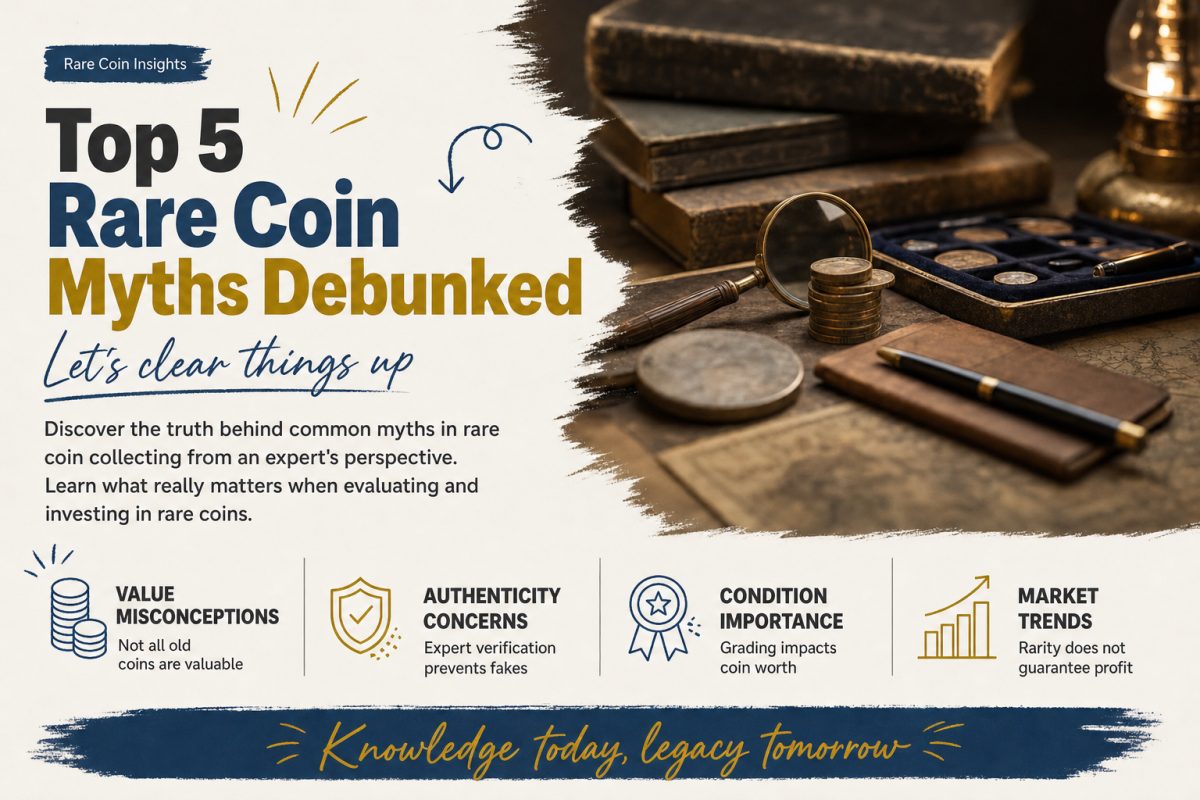
Top 5 Rare Coin Myths Debunked by an Experienced Collector
Navigating the world of coin collecting can be overwhelming, especially with the abundance of myths and misconceptions surrounding rare coins. These rare coin myths often lead collectors—both new and seasoned—into misguided decisions that can affect the value and enjoyment of their collections. Drawing from decades of hands-on experience, Armand Keywell and the team at Keywell Collectibles aim to shed light on the truth behind these common misunderstandings. This article uncovers the top 5 rare coin myths, helping you make informed choices and build a collection rooted in knowledge and trust.
Myth 1: All Rare Coins Are Automatically Valuable
Many people assume that rarity alone guarantees a coin’s high value. While rarity is an important factor, it is far from the only determinant of worth. Coins must also be desirable, authentic, and in good condition to command premium prices. For example, a rare coin with heavy wear or damage may be worth significantly less than a more common coin in pristine condition.
Understanding the Role of Condition and Demand
Coin grading, which assesses condition, plays a crucial role in valuation. Collectors and investors often seek coins with sharp details, minimal marks, and original luster. Additionally, market demand fluctuates based on collector interest, historical significance, and trends. A rare coin from an unpopular series or era may not have strong demand despite its scarcity.
Myth 2: Cleaning Coins Improves Their Value
This is a critical caution for all collectors: never clean your coins. Despite the temptation to make a coin look shiny and new, cleaning often does more harm than good. Abrasive cleaning methods can damage the surface, alter the coin’s natural patina, and drastically reduce its numismatic value.
Why Natural Patina Matters
The natural toning or patina on a coin tells a story of its age and authenticity. Removing this layer through cleaning can raise red flags for buyers and grading services. Instead, preservation through proper storage and handling is the best way to maintain or increase a coin’s value over time.
Myth 3: Grading Services Always Agree on Coin Condition
Many collectors rely on third-party grading services to certify their coins’ condition and authenticity. However, it’s a myth that all grading companies will provide the same grade for a coin. In reality, grading can be subjective, and slight differences in opinion are common.
Choosing the Right Grading Service
Different services have varying standards and reputations. Some are considered more stringent or consistent, while others may be more lenient. Understanding these nuances and consulting experts can help you interpret grading results more effectively and avoid costly mistakes.
Myth 4: All Old Coins Are Rare
Age alone does not make a coin rare. While older coins tend to be scarcer than modern ones, many historic coins were produced in large quantities and remain readily available to collectors. The key is to distinguish between age, mintage numbers, and survival rates.
Factors That Influence Rarity Beyond Age
Coins with low original mintage, those struck in limited editions, or those that survived in small numbers are truly rare. Conversely, some centuries-old coins can be surprisingly common, especially if they were minted in vast quantities or preserved in high numbers.
Myth 5: Investing in Rare Coins Is Risk-Free
While rare coins can be a rewarding investment, they are not without risk. Like all collectibles, coin markets fluctuate based on economic conditions, collector interest, and broader market trends. Assuming rare coins are a guaranteed way to grow wealth is a misconception that can lead to disappointment.
Mitigating Risk Through Knowledge and Strategy
Successful coin investment requires careful research, expert advice, and a diversified approach. Understanding market cycles, verifying authenticity, and focusing on quality coins with solid provenance can help reduce risk and protect your investment.
Summary: Avoiding These Rare Coin Myths Ensures Smarter Collecting
The hobby and investment potential of rare coins are best enjoyed with clear-eyed knowledge rather than myths. By recognizing that value depends on condition, demand, and authenticity—not just rarity or age—you can build a collection with lasting worth. Avoid damaging cleaning attempts and seek expert guidance on grading and market timing to protect your collection’s integrity and value.
Quick Reference: Top 5 Rare Coin Myths
- All rare coins are automatically valuable.
- Cleaning coins improves their appearance and value.
- Grading services always agree on a coin’s condition.
- All old coins are rare.
- Investing in rare coins is risk-free.
For collectors who want to separate fact from fiction and make informed decisions, consulting with experienced professionals is essential. The team at Keywell Collectibles, led by lifelong collector Armand Keywell, offers expert insights and transparent advice tailored to your unique collection needs. Whether you are just starting out or managing an inherited estate, we provide reliable guidance and personalized service nationwide.
Ready to learn more or get a professional appraisal? Contact us today at imakeywell@gmail.com or visit our website at keywellcollectibles.com to schedule your consultation. Explore our articles for additional educational resources and stay informed with Keywell Collectibles.
