
How to Accurately Grade and Appraise Your Coins at Home
For collectors new and seasoned alike, knowing how to grade and appraise your coins at home is an essential skill. Before seeking a professional appraisal, having a clear understanding of a coin’s condition and potential value empowers you to make informed decisions. This guide will walk you through practical steps to evaluate your coins carefully and accurately, preparing you for further expert consultation or sale.
Understanding the Basics of Coin Grading
Coin grading is the process of assessing a coin’s condition, which directly affects its value. The better preserved a coin is, the higher its grade and market worth. Grading may seem daunting at first, but with patience and the right tools, you can learn to identify the key characteristics that define a coin’s grade.
Why Grading Matters
Grading provides a standardized way to communicate a coin’s condition within the collecting community. It helps buyers and sellers agree on value and reduces uncertainty. Even slight differences in grade can significantly impact a coin’s price, especially for rare and collectible pieces.
Common Grading Scales
Most collectors use the Sheldon scale, which ranges from 1 to 70. Here’s a brief overview:
- Poor (P-1 to Fair (FR-2): Extremely worn coins with most details barely visible.
- Good (G-4 to VG-8): Well-worn but major features remain identifiable.
- Fine (F-12 to VF-30): Moderate wear with clear details, some luster may remain.
- Extremely Fine (EF-40 to AU-50): Light wear on high points, nearly full detail.
- Mint State (MS-60 to MS-70): No wear, with MS-70 being a perfect coin.
Tools and Techniques for Grading Coins at Home
Accurate grading requires careful observation and the right tools. Here are the essentials you’ll need to get started:
Essential Tools
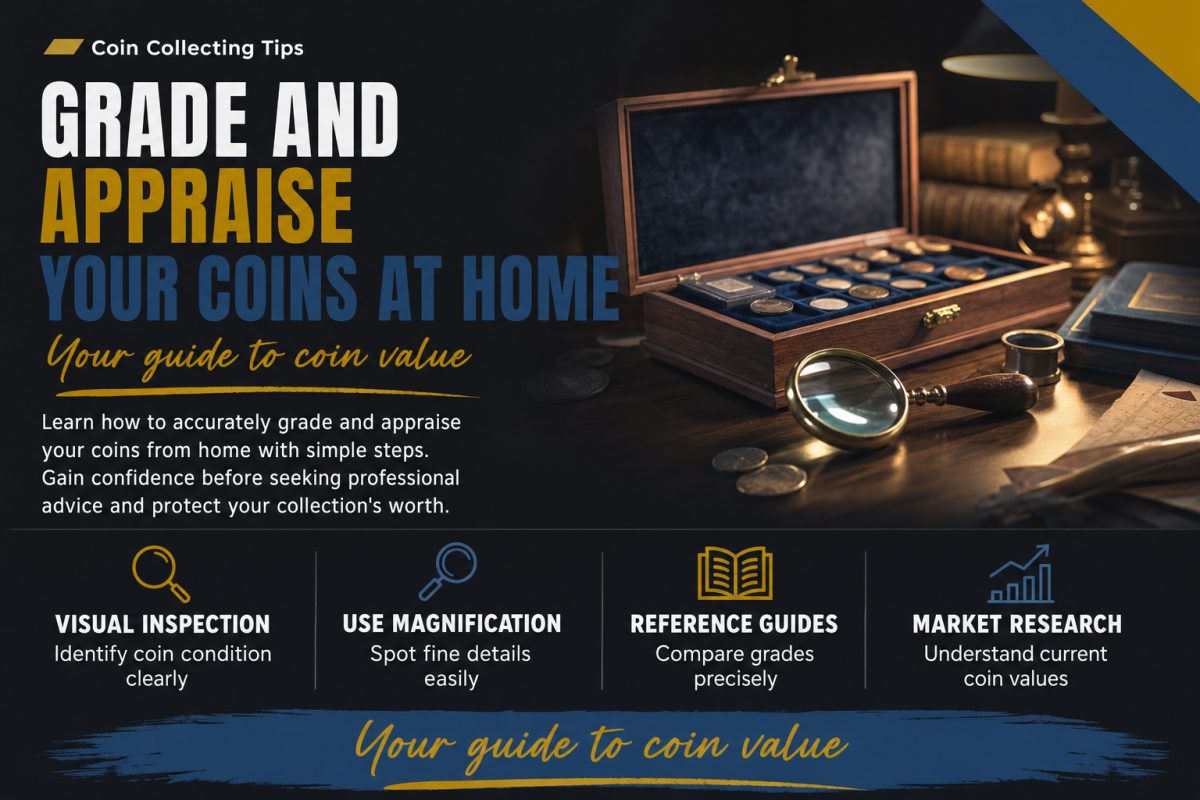
- Magnification: A 10x jeweler’s loupe is ideal for inspecting fine details and surface condition.
- Good Lighting: Natural daylight or a bright LED lamp reduces shadows and reveals true color and luster.
- Soft Gloves or Finger Cots: Protect coins from oils and dirt on your fingers.
- Reference Materials: Up-to-date coin guides or grading charts for comparison.
Steps for Grading Your Coins
- Handle Carefully: Always hold coins by the edges to avoid fingerprints or damage.
- Examine the Surface: Look for wear on high points, scratches, nicks, and any discoloration.
- Check for Luster: Original mint luster indicates less circulation and higher grade.
- Compare to Grading Standards: Use charts or guides to match your coin’s condition to established grades.
- Note Any Alterations: Be alert for cleaning or damage, which can decrease value significantly.
How to Appraise Your Coin’s Value at Home
After grading your coins, the next step is to estimate their value. While professional appraisals provide the most accurate market price, a home appraisal helps you understand your collection’s potential worth and guides your decisions.
Research Market Trends
Start by consulting recent sales records and price guides for coins similar to yours. Websites, auction results, and collectible forums offer insight into current market demand and pricing. Be mindful that coin values fluctuate based on rarity, condition, and collector interest.
Consider Rarity and Demand
A coin’s rarity greatly affects its value. Limited mintages, historical significance, or unique errors can increase desirability. Demand varies by collector interest and market trends, so even common coins can occasionally rise in value.
Use Online Tools Cautiously
Many online valuation tools and price guides can offer quick estimates. However, treat these as starting points rather than definitive values. Always cross-reference multiple sources and remember that condition and authenticity are critical factors.
Best Practices to Prepare for Professional Appraisal
Once you have graded and appraised your coins at home, you’ll be better prepared to seek professional advice. Presenting your coins well and having preliminary knowledge can streamline the process and help you get the most accurate evaluation.
Organize Your Collection
Group coins by type, date, or grade to simplify inspection. Use appropriate holders or flips to protect and display them neatly. This organization aids professionals in assessing your collection efficiently.
Document Your Findings
Keep a detailed record of your grading notes, estimated values, and any research. This documentation shows your due diligence and helps professionals understand your perspective.
Choose Reputable Experts
Select appraisers or dealers with proven experience and credentials in numismatics. Transparency and trustworthiness are key. When possible, seek recommendations or verify their reputation through collector communities.
Common Pitfalls to Avoid When Grading and Appraising at Home
- Never Clean Your Coins: Cleaning can damage surfaces and drastically reduce value.
- Avoid Guesswork: Rely on trusted guides and tools rather than assumptions.
- Beware of Counterfeits: If a coin seems suspicious, seek expert authentication.
- Don’t Overestimate: Be realistic about condition and market value to avoid disappointment.
Learning how to grade and appraise your coins at home is a rewarding process that deepens your appreciation and knowledge of your collection. With careful observation, research, and patience, you can confidently evaluate your coins’ condition and value, laying the groundwork for successful collecting, selling, or estate planning.
If you want to explore further or need professional guidance, Keywell Collectibles, Inc. offers expert consultation for collectors nationwide. Reach out to us at imakeywell@gmail.com or visit keywellcollectibles.com to get started today.