

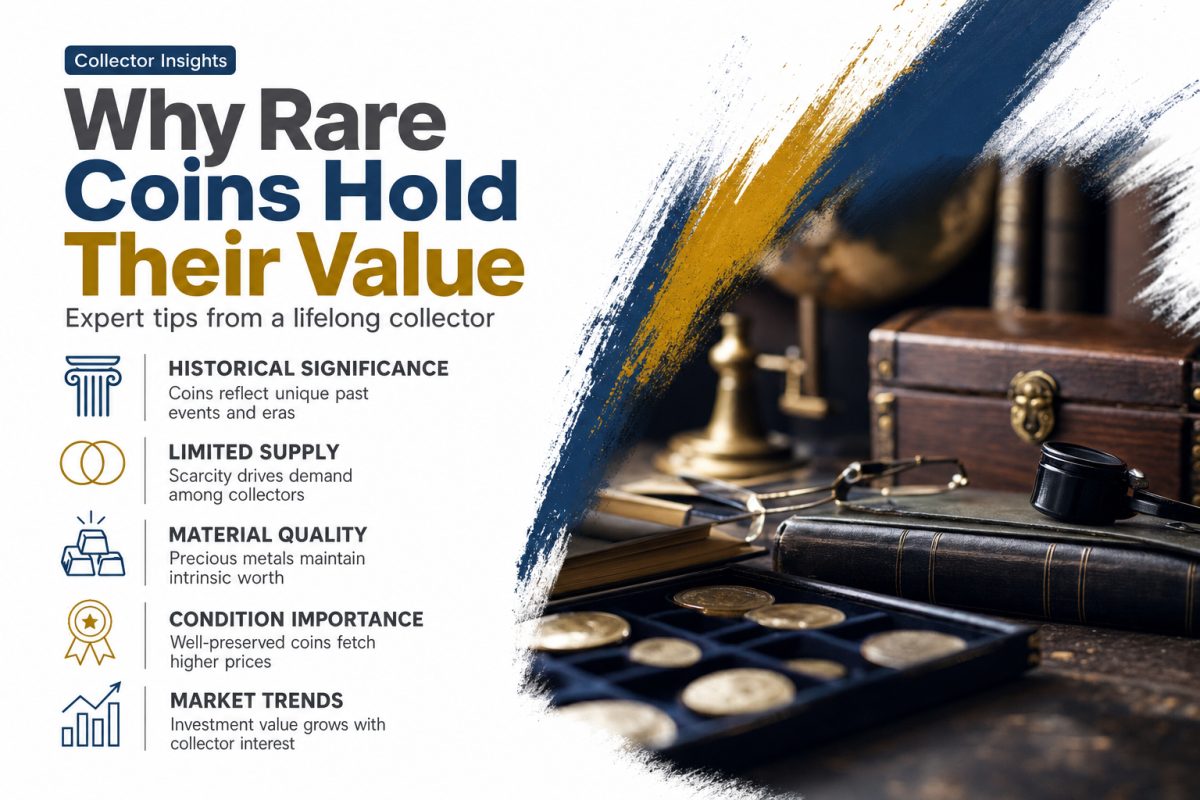
Why Rare Coins Hold Their Value: Insights from a Lifelong Collector
For collectors and investors alike, understanding why rare coins hold their value is essential to building a meaningful and lasting collection. Throughout decades of experience, lifelong collectors have observed that several key factors influence the value of rare coins beyond mere scarcity. This article delves into those factors, offering insights that can help both new and seasoned collectors identify coins that retain or even appreciate in worth over time.
The Foundation of Value: What Makes a Coin Rare?
Rarity is often the first word that comes to mind when discussing valuable coins, but rarity alone does not guarantee value. Instead, rarity must be understood in context. A coin’s rarity is determined by several elements:
- Mintage Numbers: How many coins were originally produced by the mint.
- Survivability: How many coins have survived in collectible condition.
- Historical Significance: The story or event behind the coin that adds to its desirability.
- Demand Among Collectors: Popularity within the numismatic community.
Mintage Versus Survivability
While a low mintage number often implies rarity, it is the survivability of coins in good condition that truly impacts value. For example, a coin minted in small quantities but commonly found in worn condition may be less valuable than a coin with a higher mintage but fewer well-preserved examples.
Historical Significance and Provenance
Coins linked to important historical events or issued during notable eras tend to carry added value. Provenance—the documented ownership history—can further elevate a coin’s prestige and price, especially if it belonged to a famous collection or was part of a significant discovery.
Quality and Condition: The Role of Grading in Value Retention
One of the most critical factors influencing why rare coins hold their value is their condition. The coin grading system evaluates the wear and preservation level of a coin, which directly affects its market value.
Understanding Coin Grading
Professional grading services assign grades ranging from Poor (P-1) to Perfect Mint State (MS-70). High-grade coins that show minimal wear and retain their original luster are far more desirable and valuable. A coin’s grade can sometimes be even more important than its rarity.
Why Condition Matters Over Time
Collectors seek coins that have been well-preserved because these pieces maintain their aesthetic appeal and investment potential. Coins in poor condition may be less attractive and harder to sell, even if they are rare.
Market Demand and Trends: What Drives Collector Interest?
Even the rarest coins must find a willing buyer to hold or increase their value. Market demand is shaped by factors such as collector preferences, economic conditions, and emerging trends.
Collector Preferences
Interest in certain types of coins—such as early American coins, foreign currency, or precious metal content—can fluctuate over time. Staying informed about what collectors currently value can help buyers focus their efforts on coins that are more likely to appreciate.
Economic Factors
Precious metals like gold and silver tend to rise in value during times of economic uncertainty, which can increase demand for coins containing these metals. Conversely, market downturns can reduce collectible demand temporarily.
Emerging Trends and Niche Collecting
New collecting niches, such as thematic collections or coins with unique errors, often attract fresh interest. Recognizing these trends early can offer collectors an advantage in acquiring undervalued coins.
How to Identify Rare Coins That Will Hold Their Value
Identifying coins that will retain or grow in value requires a combination of knowledge, experience, and careful research. Here are practical tips for collectors:
- Research Thoroughly: Study mintage figures, historical context, and recent auction results.
- Consult Trusted Experts: Seek advice from experienced collectors or reputable numismatic dealers.
- Evaluate Condition Carefully: Learn the basics of coin grading or use professional grading services.
- Focus on Well-Documented Provenance: Verify the history and authenticity of the coin.
- Watch Market Trends: Monitor collector interest and precious metal prices.
The Importance of Patience and Long-Term Perspective
Rare coin collecting is rarely a path to quick profits. Those who understand why rare coins hold their value recognize the importance of patience. Holding onto quality pieces through market fluctuations often yields the best returns.
Conclusion: Building a Valuable Collection with Confidence
Understanding why rare coins hold their value involves appreciating the balance between rarity, condition, historical significance, and market demand. By learning these fundamentals from a lifelong collector’s perspective, you can make informed decisions that protect your investment and deepen your enjoyment of the hobby.
Whether you are starting your first collection or expanding an existing one, expert guidance is invaluable. For personalized advice and trustworthy expertise, contact Keywell Collectibles, Inc. Our founder, Armand Keywell, brings decades of hands-on experience to help you identify, appraise, and preserve rare coins. Reach out today at imakeywell@gmail.com or visit keywellcollectibles.com to learn more about our services and how we can support your collecting journey.