But alongside the sentimental value, an inherited collection usually brings a wave of anxiety.
Suddenly, you are handed heavy boxes, dusty albums, or a safe full of metal and paper that you know nothing about.
Are these rare historical artifacts worth thousands of dollars, or just a jar of old pocket change? How do you store them? And most importantly, how do you avoid making a costly mistake before you even know what you have?
At Keywell Collectibles, we work with families every day who are navigating this exact situation. If you have just inherited a collection, take a deep breath, and follow this step-by-step guide to protecting your family’s legacy.
Step 1: The Golden Rule—Do Not Clean Anything
This cannot be overstated. If you take only one piece of advice from this guide, let it be this: Never clean, polish, wipe, or wash the coins.
It is human nature to want to make old things look shiny and new, especially if you plan to sell them. But in the numismatic world, cleaning a coin destroys its value. A dark, tarnished silver dollar with its original “skin” is always worth more than a coin that has been chemically dipped or scrubbed with a cloth. Cleaning leaves microscopic scratches on the surface that professional appraisers can spot instantly, often cutting the collector value of the coin in half.
Leave the dust, leave the tarnish, and leave the dirt exactly where it is.
Step 2: Secure and Protect
Before you start digging through the collection, make sure you are handling the items correctly.
- Hold by the Edges: When picking up a raw (un-encapsulated) coin, only touch the rim. The oils and acids on your fingers can permanently etch your fingerprints into the metal over time.
- Keep Them in Their Holders: If the coins are in cardboard flips, plastic cases, or old albums, leave them there. Removing them increases the risk of dropping or scratching them.
- Avoid PVC: If you must buy new storage supplies, ensure any plastic sleeves or flips you purchase are specifically labeled as “PVC-free.” PVC plastics break down over time and leave a sticky, green, acidic residue on coins that will ruin them.
Step 3: The Initial Triage (Sorting)
You don’t need to be an expert to do a basic sort of the collection. Getting a general sense of what you have will make the professional appraisal process much smoother. Try to group the collection into these broad categories:
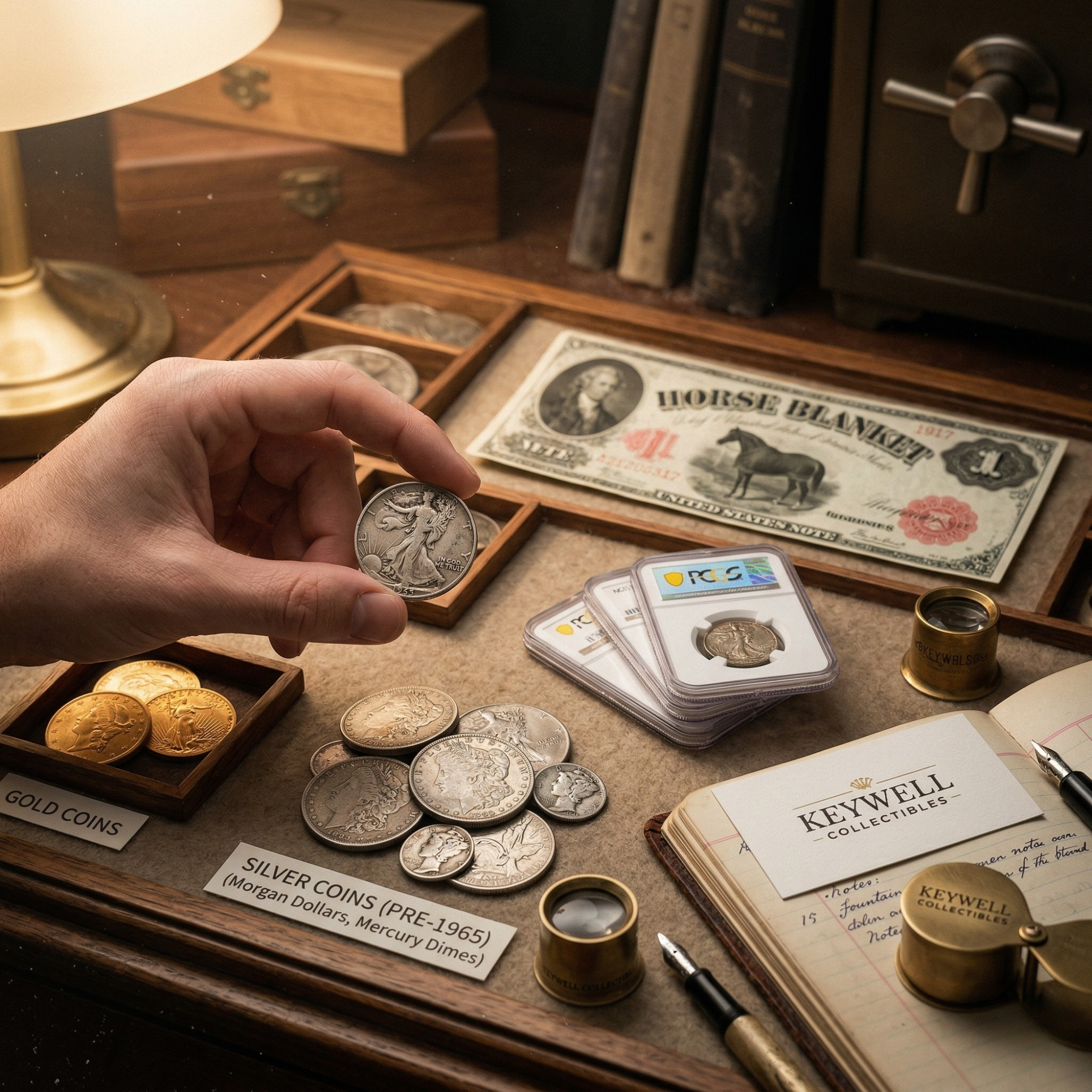
- Gold Coins – Any coin made of gold is valuable. Separate these immediately. They are highly sought after both for their precious metal content and their historical premium.
- Silver Coins (Pre-1965) – In the United States, dimes, quarters, and half dollars minted in 1964 and earlier are made of 90% silver. Even if they are completely worn down, they are worth significantly more than their face value. Group these together. (Note: Kennedy Half Dollars from 1965 to 1970 also contain 40% silver).
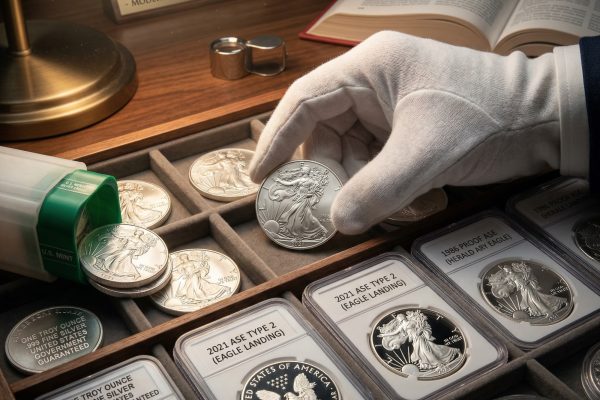
- Graded and Encapsulated Coins – Look for coins sealed in hard plastic rectangular cases (slabs) with holographic labels and barcodes from companies like PCGS, NGC, ANACS, or CACG. These have already been professionally authenticated and graded, meaning they are likely some of the more valuable pieces in the collection.
- Vintage Paper Money – Set aside any old paper currency, especially bills that are larger than modern money (“Horse Blankets”), or bills with red, blue, or gold seals instead of the standard green. Remember: handle paper money as little as possible, and never fold it.
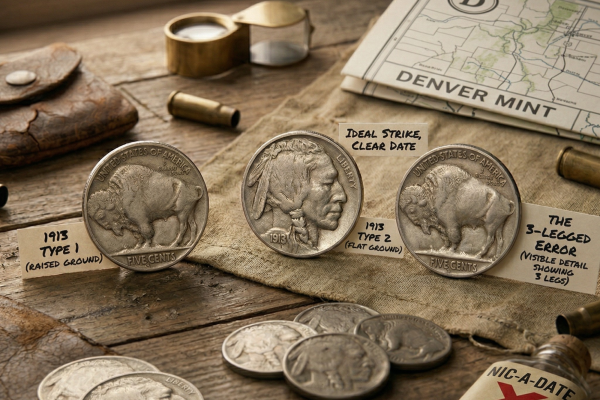
- The “Everything Else” Box – This will likely include old pennies (like Wheat Cents or Indian Heads), Buffalo nickels, foreign coins, and modern proof sets. While there can absolutely be hidden gems in here, this group usually requires the most time to sort and appraise.
Step 4: Avoid the “Quick Cash” Traps
When people inherit large volumes of coins, the sheer weight and space they take up can be overwhelming. This leads to two common mistakes:
- The Bank: Never take inherited coins to a bank or a Coinstar machine. You will only receive face value (or less, after machine fees). A teller will happily give you 25 cents for a 1932 Washington Quarter, even though its silver content alone makes it worth much more.
- The Pawn Shop: While pawn shops deal in precious metals, they are generalists, not numismatists. They will typically only offer you a percentage of the “melt value” for the metal, entirely ignoring the collector premium that a rare date or mint mark might carry.
Step 5: Call a Professional Numismatist
Once the collection is secure and roughly sorted, it is time to bring in an expert. You need a dedicated coin dealer who understands the nuances of mint marks, strike quality, historical context, and the current collector market.
A professional appraiser will:
- Identify counterfeit or altered coins.
- Pinpoint the exact grade of the coins.
- Recognize rare varieties or key dates that look identical to common coins to the untrained eye.
- Provide you with an accurate, current market valuation.
Honoring the Legacy
Deciding what to do with an inherited collection is a personal choice. You may decide to sell the entire collection to fund a child’s education or a home renovation. You might choose to sell the bulk of it but keep a few beautiful pieces as family heirlooms. Or, you might find that you’ve caught the “collecting bug” yourself and decide to continue building where your loved one left off.
Whatever you decide, taking the time to have the collection properly evaluated ensures that you are making an informed financial decision while honoring the time and passion it took to build it.
Ready for a Professional Appraisal?
If you have inherited a collection, you don’t have to figure it out alone. At Keywell Collectibles, we provide transparent, expert appraisals for estates and family collections of all sizes. We will walk you through exactly what you have and help you understand your options.
Contact Keywell Collectibles today to schedule a consultation for your inherited collection.