While modern dimes feature the stoic profile of Franklin D. Roosevelt, the dimes minted between 1916 and 1945 featured something entirely different: a striking, mythological portrait that remains a favorite among collectors and investors to this day. But the most interesting part of this coin is that almost everything people believe about it is wrong.
A Case of Mistaken Identity
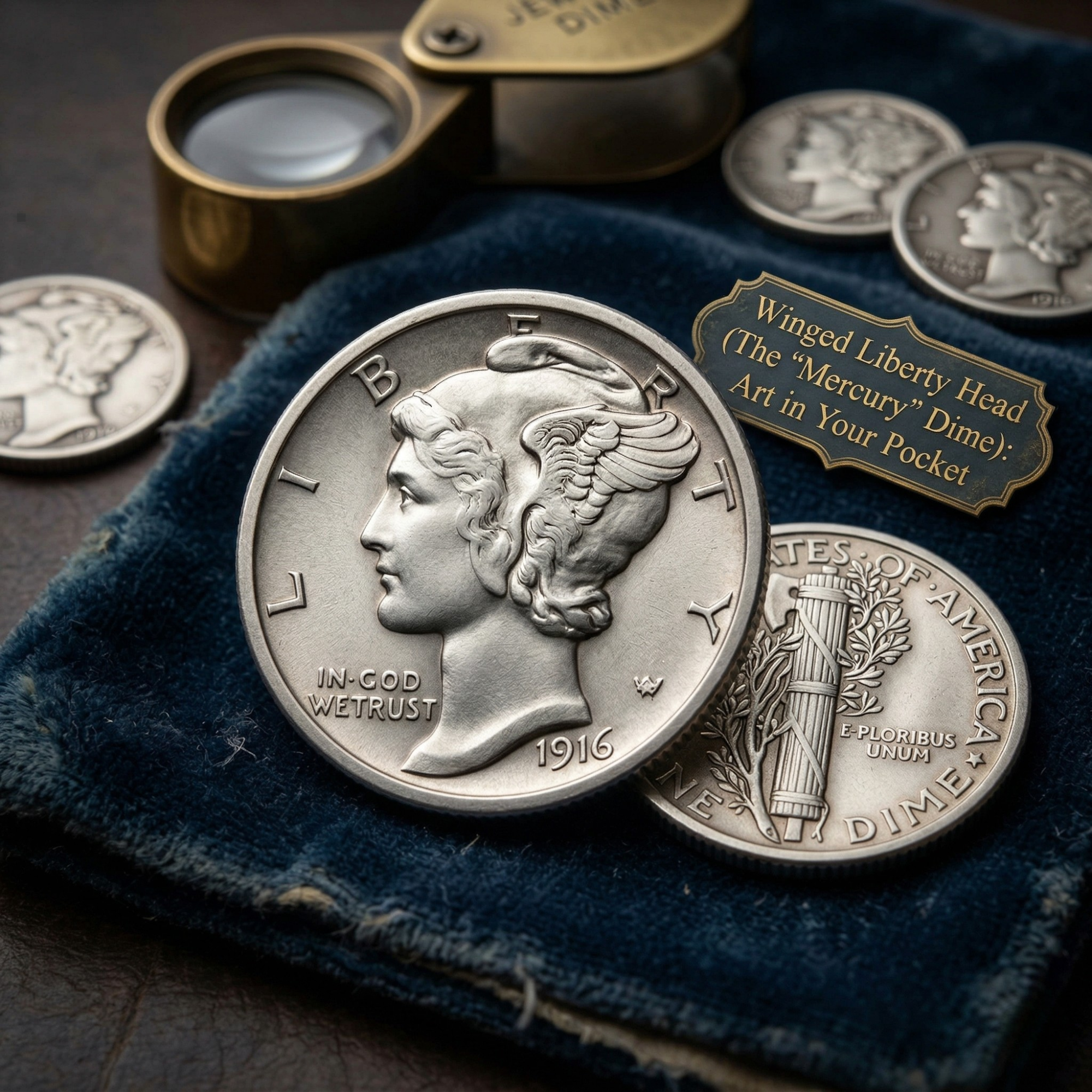
First and foremost, that is not the Roman god Mercury on the front of the coin. When Adolph A. Weinman designed the piece in 1916 as part of the “Renaissance of American Coinage,” he actually created a depiction of a young Liberty wearing a winged cap. The cap was meant to symbolize “freedom of thought.” However, the public immediately confused the winged cap with the winged sandals and helmet worn by Mercury, the Roman messenger god. The name “Mercury Dime” stuck instantly, and the Mint’s official title—the “Winged Liberty Head Dime”—was almost completely forgotten by the general public.
The 1916-D: The King of Dimes
Collecting Mercury Dimes is incredibly popular because completing a set is achievable for most people—with one massive exception. While the Philadelphia and San Francisco mints produced tens of millions of dimes in the first year of production (1916), the Denver Mint struck only 264,000 before the dies were changed.
Today, the 1916-D Mercury Dime is a legendary rarity. Because so many were lost in circulation over the decades, finding one in any condition is a major event. Even a heavily worn example where the date is barely readable can sell for thousands of dollars.
Full Bands (FB): The Ultimate Grade
If you want to dive deep into the Mercury Dime investment market, you have to understand the reverse (back) of the coin. The design features a fasces—a bundle of sticks tied together around an axe blade, an ancient symbol of unity and strength. The sticks are held together by horizontal bands.
Because of the way the coins were struck, the metal didn’t always fill the deepest parts of the die. Therefore, finding a Mercury Dime where the center bands are fully separated and distinct is incredibly difficult. Coins that exhibit this clean strike receive the highly coveted Full Bands (FB) designation from grading companies like PCGS and NGC, commanding a massive premium over standard examples.
The Silver Connection
Beyond their beauty and rarity, Mercury Dimes are a cornerstone of the “Junk Silver” or Constitutional Silver market. Every single Mercury Dime minted from 1916 until the end of the series in 1945 is made of 90% silver and 10% copper. Because they are older and more romanticized than the later Roosevelt Dimes, many precious metals investors specifically seek out rolls of common-date Mercury Dimes to stack strictly for their silver content and high liquidity.
A Tiny Piece of Art
The Mercury Dime is everything a collector could want. It is made of precious metal, it features a stunningly beautiful design, it has an affordable entry point for beginners, and it holds legendary rarities for the advanced numismatist to hunt. It is a true pocket-sized piece of American art.
Did You Find a Silver Treasure?
Whether you have inherited an old album of Mercury Dimes or found a silver coin in an antique jar, don’t guess at its value. The difference between a common date and a rare mint mark is just a millimeter wide, and cleaning it can ruin its value entirely.
Contact Keywell Collectibles today for a professional evaluation of your vintage silver coins