They are asking for one of the most reliable, liquid, and historically significant forms of physical wealth available: Junk Silver.
Also known with far more respect as Constitutional Silver, this category of coinage is a foundational pillar for both stackers (precious metal investors) and numismatists alike. If you are looking for a straightforward, tangible way to invest in silver without paying massive premiums for modern designs, this is where you start.
At Keywell Collectibles, we buy and sell thousands of ounces of Constitutional Silver. Here is everything you need to know about the most misunderstood term in the hobby.
The Misnomer of “Junk” Silver
The word “junk” sounds derogatory, but in numismatics, it has a very specific, technical meaning.
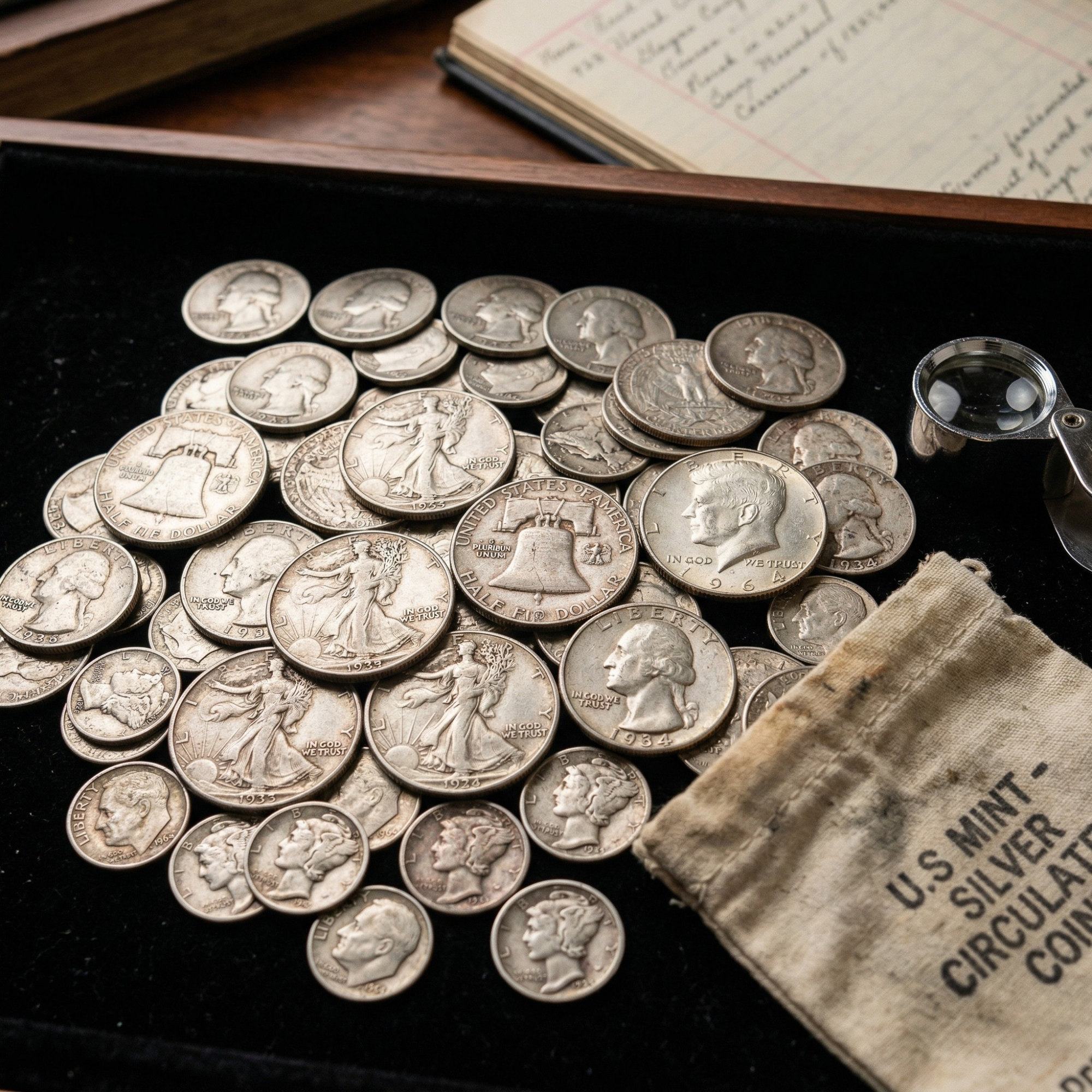
“Junk silver” simply refers to silver coins that have no numismatic (collector) value. They are not rare dates, they do not have special mint marks, and they are typically in circulated condition, showing the wear and tear of everyday use.
Because they lack a collector premium, their value is tied almost entirely to their melt value—the current market price of the physical silver they contain.
We prefer the term Constitutional Silver because it reminds us of what these coins actually are: legal tender struck by the United States Mint for the American people, backed by the intrinsic value of precious metal.
What Coins Are Considered Junk Silver?
Before 1965, the United States minted its standard dimes, quarters, and half dollars out of 90% silver and 10% copper (added for durability). When the Coinage Act of 1965 removed silver from circulating dimes and quarters, the public immediately began hoarding the older, silver-rich coins.
Today, the most common 90% Constitutional Silver coins you will encounter include:
- Dimes: Roosevelt Dimes (1946–1964) and common-date Mercury Dimes (1916–1945).
- Quarters: Washington Quarters (1932–1964).
- Half Dollars: 1964 Kennedy Half Dollars, Franklin Half Dollars (1948–1963), and common-date Walking Liberty Half Dollars (1916–1947).
(Note: There are also 40% silver Kennedy Half Dollars from 1965–1970 and 35% silver “War Nickels” from 1942–1945, but 90% silver is the undisputed gold standard of this market).
How Is It Priced? The “Face Value” Formula
Buying junk silver is different from buying modern bullion like American Silver Eagles or one-ounce silver bars. Instead of buying by the troy ounce, Constitutional Silver is bought and sold by its Face Value (FV).
Here is the magic mathematical rule of 90% silver: $1.40 in face value contains exactly 1.008 troy ounces of pure silver. (Many investors simply round this and say that $1.00 in face value equals roughly 0.715 ounces of silver).
Because of this standard weight, dealers price junk silver as a multiple of its face value. For example, if silver prices are up, a dealer might quote you “20x face.”
- This means a silver dime ($0.10 FV) costs $2.00.
- A silver quarter ($0.25 FV) costs $5.00.
- A silver half dollar ($0.50 FV) costs $10.00.
This simple math makes it incredibly easy to buy, sell, and trade in bulk.
Why Invest in Constitutional Silver?
If you want to own physical silver, why buy bags of old, worn-out quarters instead of shiny new modern coins? There are three massive advantages to the junk silver strategy:
- Lower Premiums: When you buy a modern American Silver Eagle, you pay a premium over the spot price of silver to cover the Mint’s production costs and the dealer’s markup. Because Constitutional Silver was minted decades ago and requires no new production, the premiums are historically much lower, meaning you get more physical silver for your dollar.
- High Liquidity and Trust: Constitutional Silver is universally recognized. Every coin shop, pawn shop, and precious metals dealer in the United States knows exactly what a 1964 quarter is and what it is worth. You will never have to prove its authenticity in the way you might with a generic silver bar poured by an unknown private mint.
- Ultimate Divisibility (The Barter Appeal): One of the biggest draws for investors is fractional divisibility. If you own a 100-ounce silver bar and need to sell just a little bit of it to cover a small expense, you can’t exactly saw a corner off. With junk silver, your investment is broken down into tiny increments. You can sell a single dime, a roll of quarters, or a massive canvas bag holding $1,000 in face value. For investors preparing for economic instability, Constitutional Silver is often viewed as the ultimate barter currency.
Stacking Your Wealth
Investing in Constitutional Silver is a nod to the past and a hedge for the future. You are holding real, historical money that has survived decades of economic shifts. Whether you are looking to dip your toes into precious metals with a single roll of silver dimes, or you are looking to secure a major investment in canvas bags of half dollars, this market offers unmatched flexibility.
Ready to Buy or Sell Junk Silver?
Navigating the silver market requires a trusted partner who can offer fair multipliers and verify the absence of rare numismatic dates in your bulk lots.
Contact Keywell Collectibles today for live, competitive pricing on buying or selling 90% Constitutional Silver.