But in the world of numismatics, there is a strange exception to this rule.
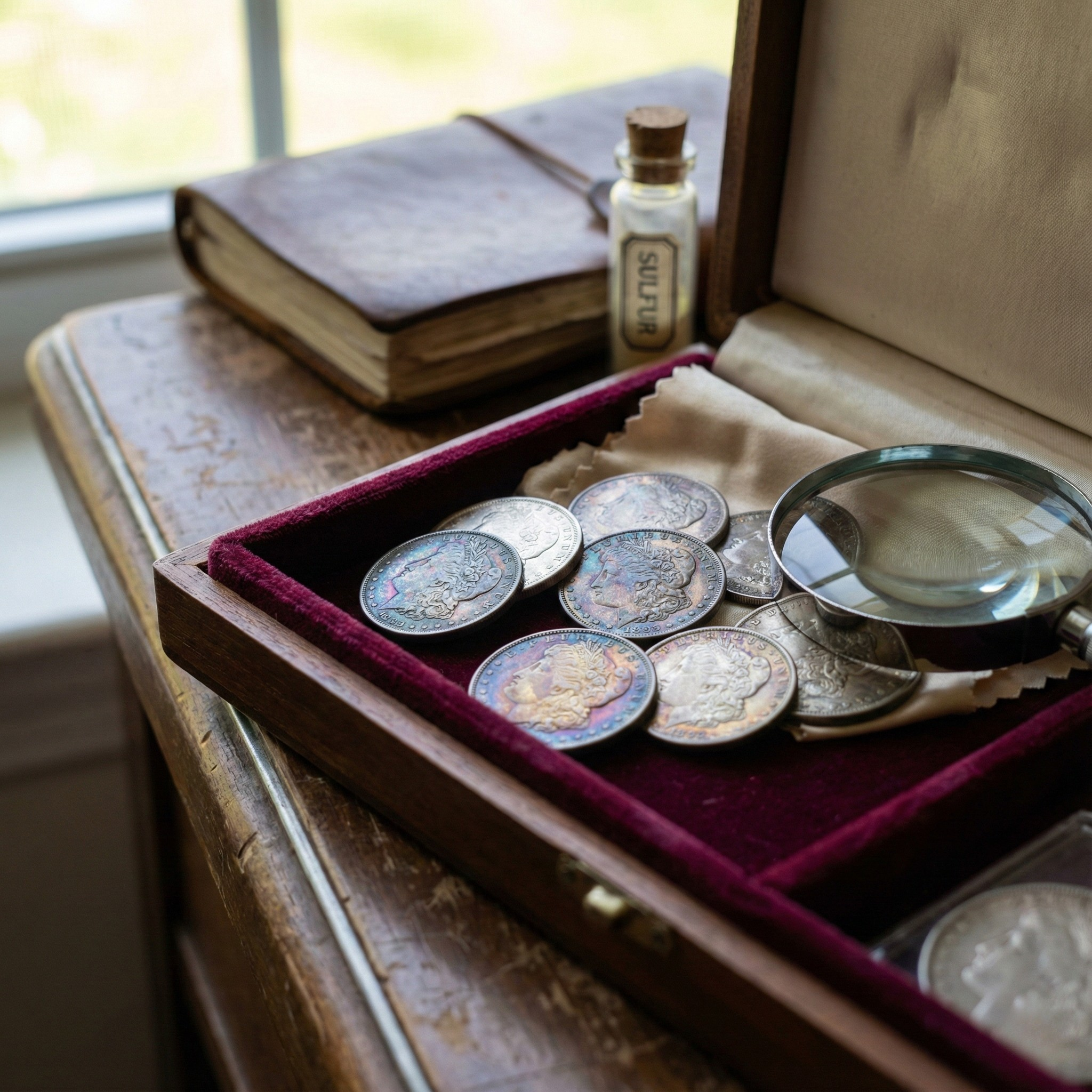
Sometimes, a silver coin that has turned blue, purple, magenta, and gold—technically a form of environmental damage—can sell for ten times the price of a brilliant, shiny example.
This is the phenomenon of Coin Toning.
For new collectors, toning is often polarizing. You either love the unique, artistic look of a “rainbow” coin, or you view it as tarnish that ruins the surface. However, understanding the market for toned coins is essential, because knowing the difference between “good” toning and “bad” toning can be the difference between a high-value rarity and a damaged coin.
What is Toning, Really?
Scientifically speaking, toning is oxidation. It is a chemical reaction between the metal of the coin and the environment it is stored in.
While gold is relatively inert and rarely changes color, silver and copper are highly reactive. When silver interacts with sulfur in the air or chemicals in storage materials, a thin layer of silver sulfide forms on the surface.
Depending on the thickness of this layer, light refracts off the coin differently, creating colors. It is the same physics that causes a thin layer of oil on a puddle of water to look like a rainbow.
- Early Toning: Usually appears as a light gold or champagne color.
- Mid-Stage Toning: Develops into blues, reds, and magentas.
- Late-Stage Toning: Eventually turns into dark grey or black (terminal tarnish).
The “Monster Tone” Premium
In the modern coin market, “Eye Appeal” is king. A standard 1881-S Morgan Silver Dollar might be worth $60 or $70 in mint condition. But if that same coin has a crescent of vibrant emerald green and violet toning across the front, it could easily sell for $500 or more.
Collectors call these “Monster Toned” coins.
Why the premium? Because toning makes the coin unique. You can find thousands of brilliant white 1881-S Morgans, and they all look identical. But a toned coin is a one-of-a-kind piece of art created by chemistry and time. No two are exactly alike.
The Source Matters: Bag Toning vs. Album Toning
Where does this color come from? For vintage US coins, the specific colors often tell us where the coin spent the last few decades.
- Bag Toning: This is most common on Morgan Dollars. For decades, these coins sat in canvas bags in treasury vaults. The sulfur in the canvas cloth reacted with the coins touching the bag, creating vibrant, textile-patterned colors on one side of the coin (the side touching the fabric), while the other side remained white.
- Album Toning: In the mid-20th century, many collectors used cardboard coin albums (like the famous Wayte Raymond albums). The paper in these albums had a high sulfur content. Over years, this created concentric rings of color (bullseyes) around the edges of the coins.
- Envelope Toning: Coins stored in old manila envelopes often turn a dark, rusty orange or brown.
The Dark Side: Artificial Toning (AT)
Because toned coins sell for such high premiums, unscrupulous sellers often try to fake the look. This is called Artificial Toning (AT), and it is a major problem in the hobby.
“Coin doctors” use blowtorches, hard-boiled eggs (for the sulfur), bleach, and other chemicals to force the metal to change color rapidly.
How to Spot a Fake:
While it takes an expert eye to be 100% sure, there are red flags:
- The Crayola Look: Natural toning usually transitions smoothly from one color to another (yellow to red to blue). Artificial toning often looks like distinct, harsh blocks of color.
- Crazy Colors: If you see neon blues, electric pinks, or colors that look like an oil slick, be very suspicious.
- Top of the High Points: In natural toning, the color is on the metal. In some artificial jobs, the color looks like it is “painted” over the dirt and scratches.
If a major grading service (like PCGS or NGC) determines a coin has been Artificially Toned, they will refuse to give it a numeric grade, marking it simply as “Details – Questionable Color.” This destroys the numismatic premium.
A Warning on “Dipping”
If you inherit a collection and find coins that look dark, yellow, or blue, your first instinct might be to make them shiny again.
Do not do it.
Using a chemical “dip” to strip the toning off a coin removes a layer of the metal’s surface (the “luster”). You are effectively washing away the history and the value. A dark, original coin is always preferred over a coin that has been chemically stripped to a dull, flat grey.
Collecting the Rainbow
Toned coins represent a sophisticated area of the market. They require an understanding of how metal reacts to its environment and an appreciation for aesthetics over pure technical perfection.
If you find yourself drawn to these colorful pieces of history, focus on buying coins that have been certified by professional grading services. This is your best insurance against buying an artificially cooked fake.
When you look at a rainbow-toned Morgan Dollar, you aren’t just seeing silver; you are seeing the result of 100 years of quiet chemistry, transforming money into art.
Is Your “Dirty” Coin a Hidden Gem?
It is easy to mistake valuable natural toning for ugly tarnish. Before you dismiss a discolored coin—and definitely before you try to clean it—let us take a look.