
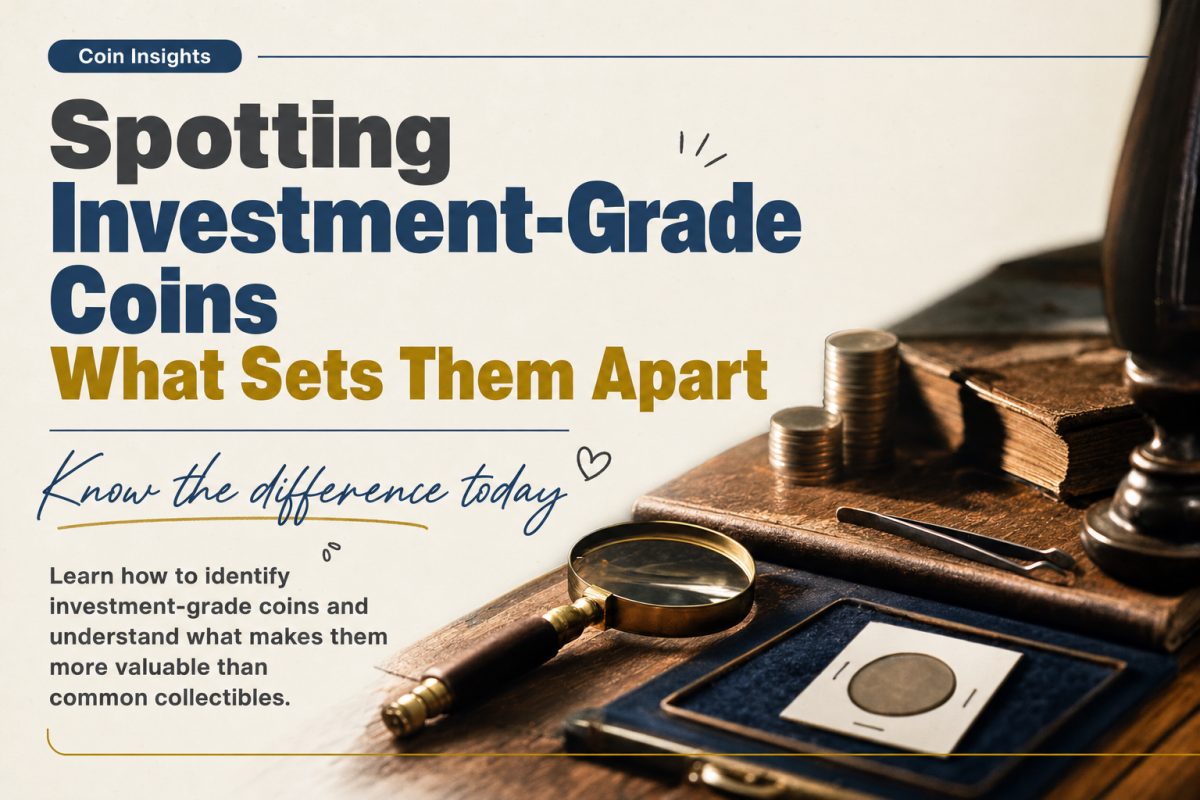
Spotting Investment-Grade Coins: What Sets Them Apart from Common Collectibles
“`html
For both new and seasoned collectors, understanding what makes certain coins investment-grade coins is essential. Not all coins hold the same value, and distinguishing investment-grade pieces from common collectibles can significantly impact your portfolio’s worth. In this article, we explore the key characteristics that elevate coins from mere keepsakes to valuable assets, providing collectors with the knowledge to make informed decisions in the complex world of numismatics.
What Defines an Investment-Grade Coin?
Investment-grade coins are those that possess qualities making them attractive not only for their historical or aesthetic appeal but also for their potential to appreciate in value. Unlike typical collectibles, these coins meet stringent criteria that reflect rarity, condition, demand, and provenance.
Rarity and Mintage
A primary factor distinguishing investment-grade coins is rarity. Coins minted in limited quantities or those with surviving populations in small numbers typically carry higher investment value. For example, a coin produced in the thousands will usually be less valuable than one with only a few hundred known specimens.
Understanding mintage figures and surviving populations helps collectors assess scarcity. However, rarity alone is not enough; the coin’s condition and demand must also align to qualify it as investment-grade.
Condition and Grading
The physical condition of a coin is paramount. Investment-grade coins often exhibit superior preservation, with minimal wear and damage. Professional grading services assign standardized grades that help determine a coin’s condition objectively.
Collectors should seek coins graded at higher levels, such as Mint State (MS) or About Uncirculated (AU), because these grades indicate coins that have retained their original luster and detail. Coins with blemishes, cleaning marks, or heavy circulation tend to have significantly lower investment potential.
Historical Significance and Provenance
Coins with documented histories or ties to important events or figures can command premium values. Provenance—the documented ownership history—adds credibility and often increases desirability among investors.
Investment-grade coins often come with certificates or appraisal documents that verify authenticity and history, ensuring buyers can trust their purchase. This level of transparency is critical when distinguishing valuable coins from common collectibles.
Key Characteristics That Set Investment-Grade Coins Apart
Recognizing the specific traits that elevate coins to investment-grade status enables collectors to focus on quality and potential return rather than sentimental value alone.
Metal Content and Composition
Precious metal content is a significant consideration. Coins made from gold, silver, or platinum typically hold intrinsic value that supports their market price.
However, investment-grade status is not solely about metal content. The coin’s rarity, condition, and demand must complement its precious metal value. Some base-metal coins with exceptional rarity or historical importance can also qualify as investment-grade.
Mint Errors and Varieties
While some collectors appreciate coins with mint errors or unique varieties, these features can add investment value only if they are rare and authenticated. Common mistakes or widely produced varieties rarely increase a coin’s worth.
Investment-grade coins with verified errors or distinct varieties often attract specialized buyers, creating niche markets where these pieces can command premiums.
Demand and Market Trends
Even the rarest and most pristine coins must have demand to maintain or increase value. Market trends fluctuate, influenced by collector interest, economic conditions, and cultural factors.
Investment-grade coins typically belong to categories with stable or growing demand. Popular series, historically significant coins, and those with strong collector communities tend to perform well.
Practical Tips for Identifying Investment-Grade Coins
Knowing what to look for when assessing a coin’s investment potential is crucial. Here are some practical guidelines to help collectors distinguish investment-grade coins from common collectibles.
- Research Thoroughly: Study mintage figures, historical context, and market trends before purchasing.
- Seek Professional Grading: Obtain third-party certification from reputable grading services to verify condition and authenticity.
- Inspect Condition Closely: Look for original luster, sharp details, and absence of cleaning or damage.
- Evaluate Provenance: Request documentation or appraisals that confirm a coin’s history and legitimacy.
- Monitor Market Demand: Follow auction results and collector forums to gauge interest and price stability.
- Beware of Overpriced Common Coins: Avoid paying premiums for coins without rarity, quality, or demand supporting their value.
Common Pitfalls to Avoid
Collectors often fall into traps that diminish investment potential. Some key pitfalls include:
- Purchasing coins with unknown or questionable authenticity.
- Overlooking the importance of condition and grading.
- Ignoring market trends and demand fluctuations.
- Confusing sentimental value with investment value.
- Attempting to clean coins, which can damage them and reduce value.
How Keywell Collectibles Supports Serious Collectors
With decades of hands-on experience, Keywell Collectibles, Inc. offers expert guidance to collectors nationwide. Whether you are just beginning or have inherited a collection, understanding investment-grade criteria is vital to building and maintaining a valuable portfolio.
Our founder, Armand Keywell, brings a lifelong passion for numismatics, ensuring transparent and knowledgeable advice. From appraisals to estate evaluations, Keywell Collectibles emphasizes personalized service tailored to each client’s goals.
Additionally, our unique “Mafia Metals” custom silver pouring service provides collectors with exclusive handcrafted silver pieces, enhancing your collection’s diversity and distinction.
Conclusion: Elevate Your Collection with Investment-Grade Coins
Spotting investment-grade coins requires a blend of knowledge, patience, and careful evaluation. By focusing on rarity, condition, provenance, and market demand, you can distinguish valuable assets from common collectibles. This approach safeguards your investment and enriches your collecting experience.
Ready to explore your collection’s investment potential or seeking expert advice? Contact Keywell Collectibles, Inc. today to schedule a consultation or appraisal. Visit keywellcollectibles.com or email us at imakeywell@gmail.com to get started.
“`
Word count: 940 words.