
Estate and Insurance Appraisals: What Inheritors Need to Know
Inheriting a collection of coins, currency, or precious metals can be both a meaningful legacy and a complex responsibility. One of the most important steps inheritors face is securing accurate estate and insurance appraisals to understand the true value of the collection. Proper appraisals ensure fair estate settlements, correct insurance coverage, and help avoid costly mistakes. This guide is designed to help those new to the process navigate appraisal essentials with confidence.
Why Estate and Insurance Appraisals Matter
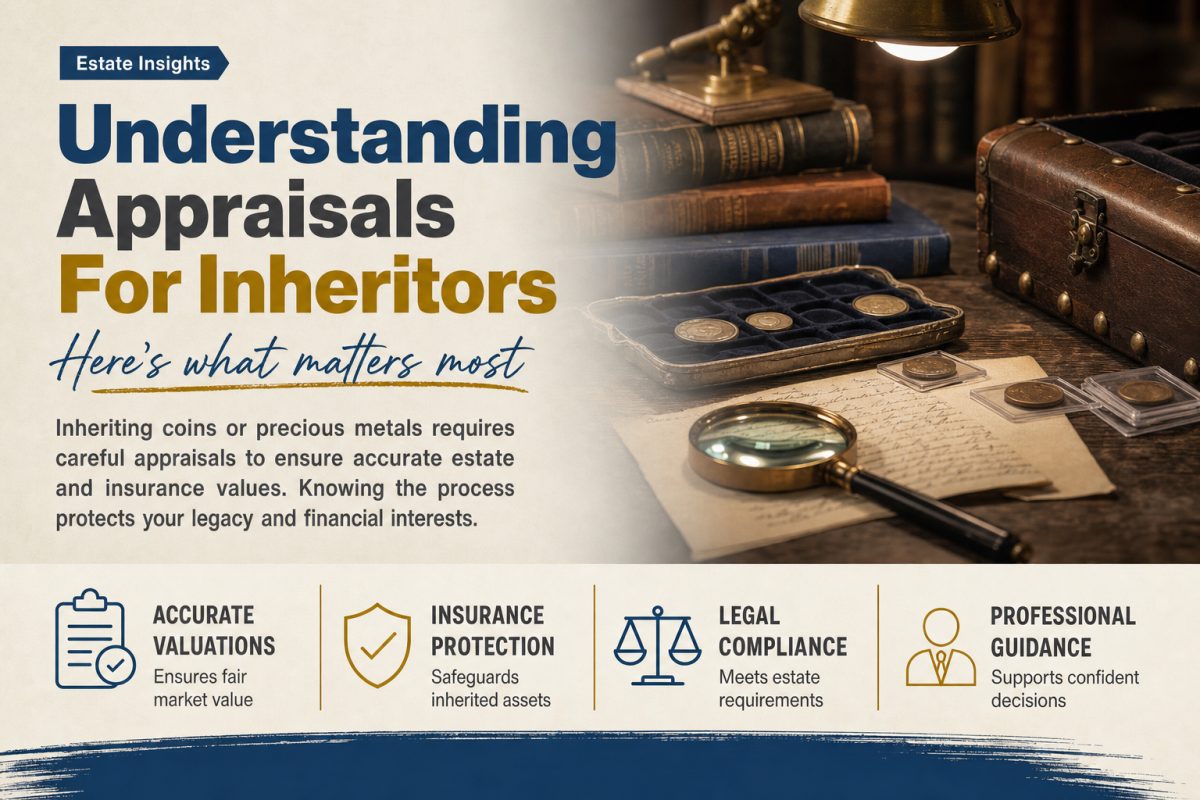
Appraisals serve different but equally critical purposes for inheritors. An estate appraisal establishes the fair market value of collectibles for probate and tax reporting. Meanwhile, insurance appraisals protect the collection against loss, theft, or damage by determining appropriate coverage amounts.
Without professional, up-to-date appraisals, inheritors risk undervaluing or overvaluing their inherited assets. This can lead to legal complications, insufficient insurance payouts, or excessive premiums.
Estate Appraisals: Legal and Tax Implications
When a collection is part of an estate, appraisals provide the official valuation required by probate courts and tax authorities. Accurate valuations help determine estate taxes and facilitate equitable distribution among heirs.
It’s important to use an appraiser with expertise in coins, currency, and precious metals to avoid inaccurate valuations that could trigger audits or legal disputes.
Insurance Appraisals: Protecting Your Inherited Collection
Insurance companies rely on appraisals to set appropriate coverage limits. An outdated or generic valuation can leave inheritors underinsured, risking major financial loss if items are stolen or damaged.
Appraisals for insurance should reflect current market conditions and be updated regularly to accommodate market fluctuations.
How to Choose the Right Appraiser
Selecting a qualified appraiser is crucial for reliable estate and insurance appraisals. Not all appraisers possess the specialized knowledge necessary for rare coins, currency, and precious metals.
Credentials and Expertise
Look for appraisers with recognized certifications such as Accredited Senior Appraiser (ASA) or Certified Numismatic Appraiser (CNA). These credentials indicate formal training and adherence to ethical appraisal standards.
Experience with estate and insurance appraisals specifically related to collectibles is a major plus, as it ensures familiarity with legal and insurance requirements.
Collector-Centric Approach
An appraiser who understands the collector’s perspective will provide a more transparent and detailed appraisal report. This includes thorough documentation and clear explanations of how values were determined.
Be wary of appraisers who offer vague estimates or pressure you to accept inflated values. A trustworthy appraiser prioritizes accuracy and transparency over quick sales.
Preparing for Your Appraisal Appointment
Proper preparation can help the appraisal process go smoothly and provide the most accurate results.
Gather Documentation and Provenance
Compile any previous purchase receipts, auction records, or provenance information related to your inherited collection. This background data helps appraisers verify authenticity and market history.
Organize and Present Items Carefully
Present items in their current condition without attempting any cleaning or restoration, as this can damage value. Use clear, labeled containers or holders to keep items organized.
Understand Appraisal Types and Fees
Clarify whether you need a fair market value appraisal for estate purposes or a replacement value appraisal for insurance. Discuss the fee structure upfront to avoid surprises.
Common Challenges and How to Avoid Them
Navigating estate and insurance appraisals can be complex. Awareness of common pitfalls helps inheritors protect their interests.
Challenge 1: Underinsurance Due to Outdated Appraisals
Market values fluctuate, especially for precious metals and rare coins. An appraisal performed years ago may no longer reflect current worth. Regular updates are essential to maintain adequate insurance coverage.
Challenge 2: Overvaluation Leading to Excessive Taxes or Premiums
Inflated appraisals can increase estate tax liability or insurance premiums unnecessarily. Seek a balanced, professional valuation to avoid financial strain.
Challenge 3: Incomplete or Vague Appraisal Reports
A quality appraisal should include detailed descriptions, photographs, and the methodology used to determine value. Request a comprehensive written report to support estate and insurance claims.
Checklist: Steps for Inheritors to Secure Accurate Appraisals
- Identify all collectible items within the estate.
- Research and select a qualified appraiser with relevant certifications.
- Gather all available documentation and provenance information.
- Schedule an appraisal appointment and discuss appraisal type and fees.
- Present items in their original condition, avoiding any cleaning or alterations.
- Request a detailed written appraisal report with photos and valuation methods.
- Use appraisal results for estate settlement and insurance coverage adjustments.
- Plan for periodic reappraisals to keep values current.
Conclusion
Inheriting a collection of coins, currency, or precious metals brings both opportunity and responsibility. Securing accurate estate and insurance appraisals is a vital step to protect your inheritance and ensure fair treatment in legal and insurance matters. By choosing a knowledgeable, certified appraiser and preparing thoroughly, you can confidently navigate this process.
For personalized guidance and expert appraisal services tailored to collectors and inheritors nationwide, contact Keywell Collectibles, Inc. Our founder, Armand Keywell, brings a lifetime of collector experience to every appraisal, ensuring fair, transparent, and detailed valuations. Reach out today at imakeywell@gmail.com to get started.
Explore more insights for collectors and inheritors on our blog.